

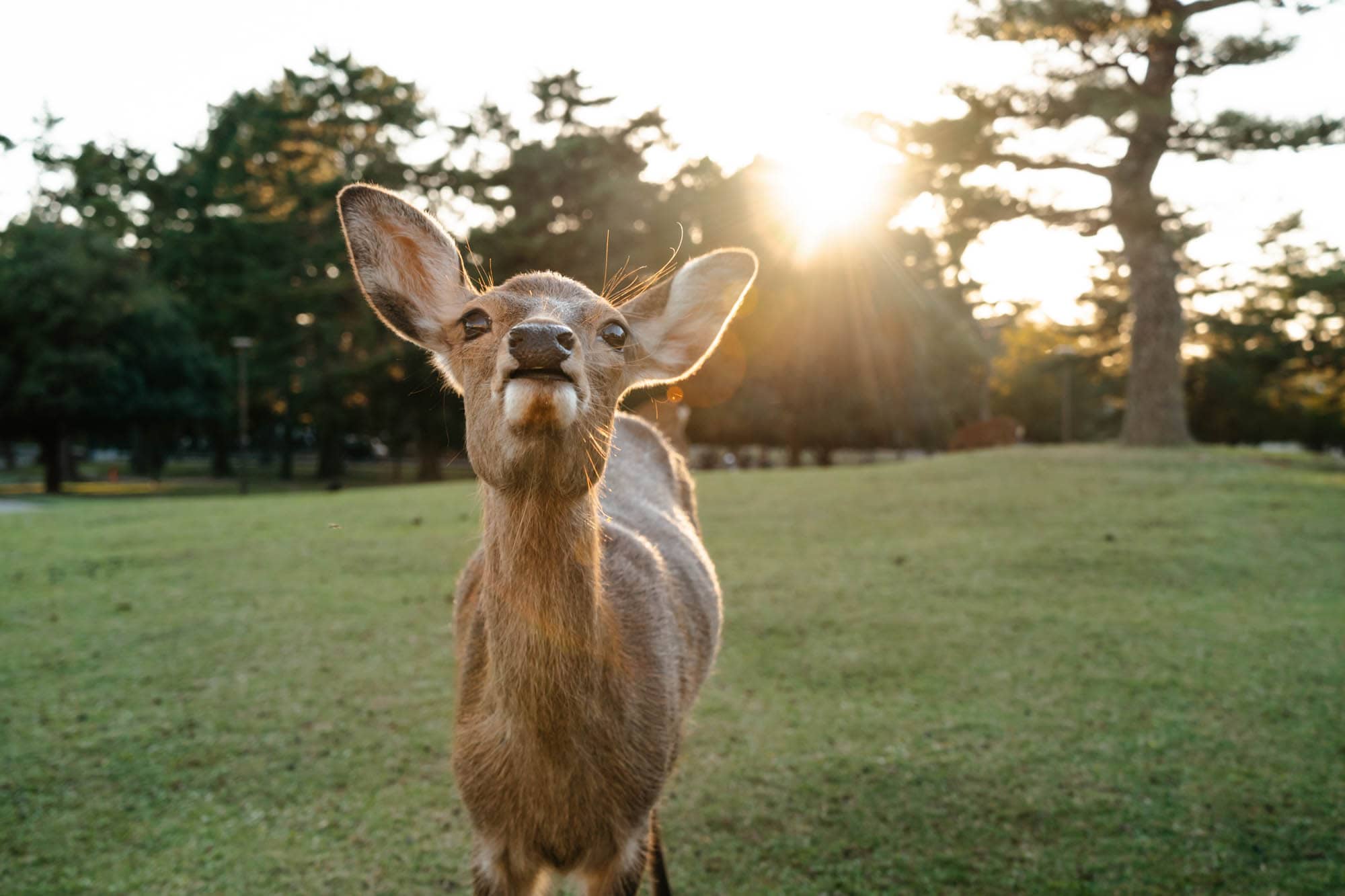
Nara was the very first capital of Japan, even before Kyoto, and that rich history still hangs in the air here. You can still find beautiful temples and shrines, but the best part about Nara might just be the hundreds of deer that dominate the streets. Everywhere you look, you encounter them—grazing in the park or resting quietly by a temple—giving this town its unique character. As a result, the former capital has become a popular destination in Japan. It is compact, easy to explore on foot, and full of history, nature, and charming details. This makes it perfect for a day trip from Kyoto or Osaka. Below you can read my tips for the best things to do in Nara.
Tip: It is best not to visit Nara on Tuesday, as many attractions are closed then. Monday, Wednesday, Thursday, and Friday are ideal, as it can be extra crowded on the weekend.


How do you travel to Nara?
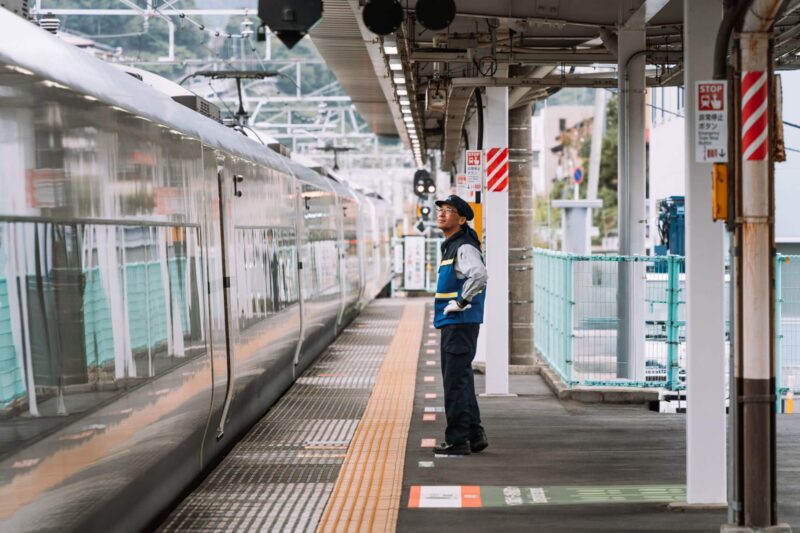
From Kyoto and Osaka, you can purchase a day pass at the station for an affordable round-trip train ticket to Nara.
From Osaka to Nara
With the JR Yamatoji Line, you travel from Osaka Station to JR Nara Station in 40 to 50 minutes (included in the Japan Rail Pass). Or in just 35 minutes with the Kintetsu Nara Line from Osaka Namba Station to Kintetsu Nara Station, which is closer to Nara Park.
From Kyoto to Nara
In about 45 minutes, you travel with the JR Nara Line from Kyoto Station to JR Nara Station (included in the Japan Rail Pass). Or in just 35 minutes with the Kintetsu Kyoto Line from Kyoto Station to Kintetsu Nara Station.



What to do in Nara?
Most people find one day sufficient for Nara and therefore visit the town as a day trip from Osaka or Kyoto. These are the best places to visit in a day.
Feed the deer in Nara Park
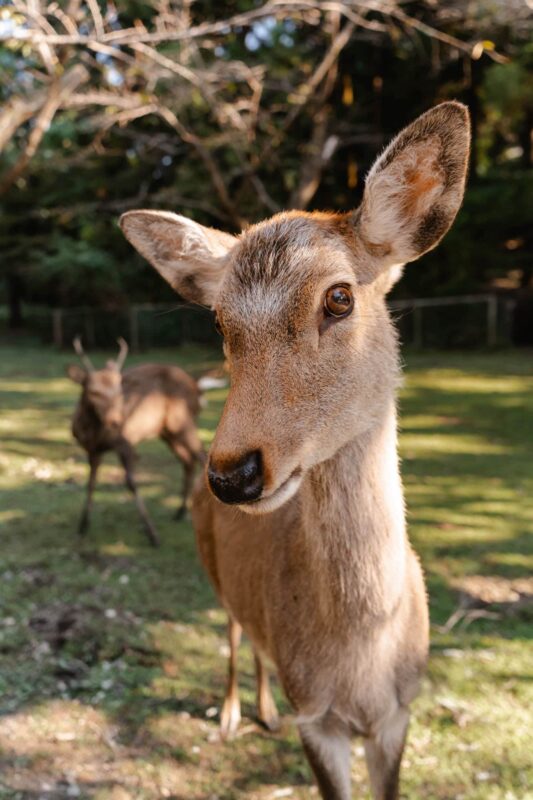
What makes the streets of Nara so unique are the more than 1,200 deer that live freely in and around Nara Park. According to Japanese mythology, they were considered messengers of the gods centuries ago. Today, they are no longer officially seen as sacred, but they remain a natural symbol of Nara. They move calmly between the temples, lawns, and all the visitors. The funny thing is that the deer bow their heads to you—a behavior that was once rewarded with food and that they have passed down from generation to generation.
You can buy special deer crackers in many places today to feed them. But be prepared: as soon as they smell that you have something, they will come straight for you and might nip at you. Despite their sweet appearance, they remain wild animals, so always keep a bit of distance and avoid sudden movements.



Visit Kōfuku-ji temple complex
On the way to Nara Park, you will pass the Kōfuku-ji temple complex with its various sacred buildings. The five-story pagoda of Kōfuku-ji is one of Nara’s landmarks, and you have a beautiful view of the pagoda from Sarusawa Pond. You can walk through this temple complex for free, but if you want to enter any of the buildings, you pay a small entrance fee.


Take in the view from Nigatsu-dō Temple
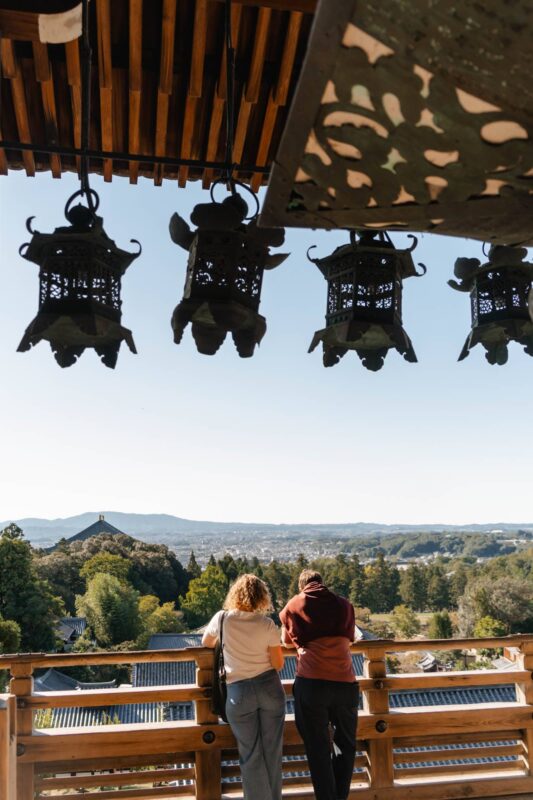
Slightly higher on the mountainside, within the Todai-ji complex, lies Nigatsu-dō Temple, a beautiful wooden temple building that has been part of this sacred area since the 8th century. The temple is decorated in detail with fine wood carvings and lanterns. March is an especially special time here, when monks carry burning torches across the balcony during the Omizutori festival—a ritual that has been performed for over 1,200 years. Via a short staircase, you reach the veranda, where you look out over Nara, the forests, and temple roofs that glow gold in the evening sun. Access is free.



Find peace in the Japanese gardens Isui-en & Yoshiki-en
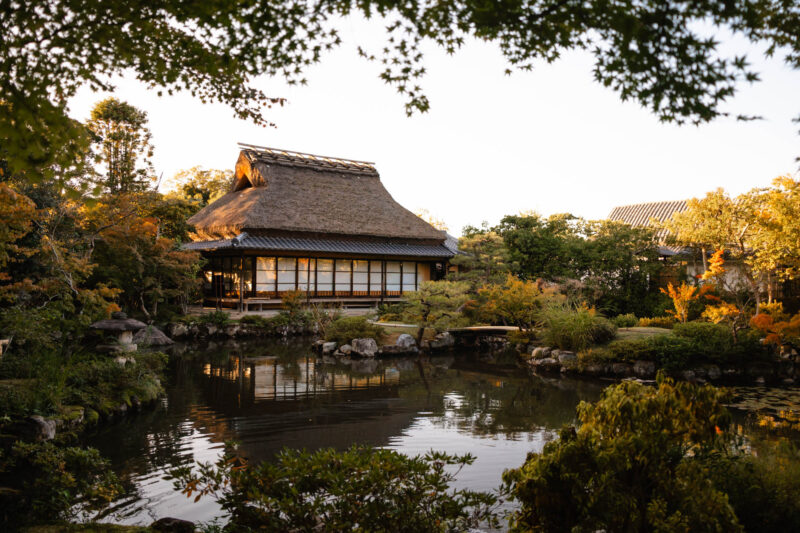
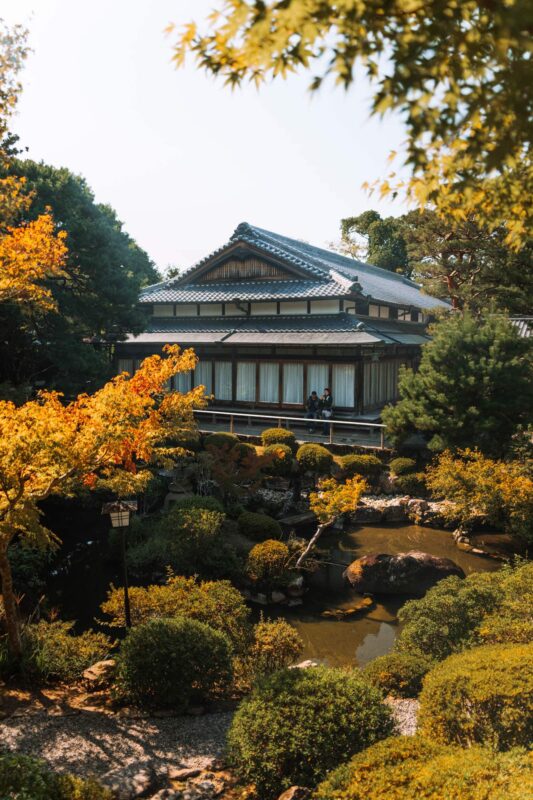
Want to take a moment of peace in Nara? Then dive into the beautiful Isui-en & Yoshiki-en gardens. Isui-en is the most beautiful and famous of the two. The garden is designed according to the shakkei principle, where the surrounding landscape is used as part of the decor. You pay an entrance fee for this garden, and you can also visit the small museum with traditional artifacts.
The Yoshiki-en garden is located next to Isui-en and is smaller but at least as atmospheric. This garden is less visited, allowing you to often walk around in silence. It consists of three parts: a moss-covered garden, a pond garden, and a tea garden where traditional tea ceremonies are regularly held. This garden is free to visit.


Visit the Todai-ji Temple and the Great Buddha
After your walk through the gardens, you can walk straight to the impressive Todai-ji Temple, the highlight of Nara. Even if you have already seen countless temples in Japan, Todai-ji Temple remains impressive due to its immense size. In the main hall, which is made entirely of wood, you will find the famous Daibutsu, a giant bronze Buddha statue over 15 meters (49.2 feet) high. Along with the other statues, it is impressive to view this from so close.


Tips for good restaurants in Nara
- Kura – This cozy izakaya (Japanese pub) serving small dishes, beer, and sake is definitely worth a visit.
- Vegan Cafe Ramuna – The menu of this charming little restaurant features delicious dishes such as a buddha bowl and karaage bento.
- Rasa Bojun Nara – Here you can enjoy delicious Sri Lankan cuisine.
- Mizuya Chaya – This restaurant is perfectly located for a bite to eat after visiting the temples. When you sit outside on the terrace, a deer will likely come by to take a curious peek.
- Sakura Burger – Best burgers in Nara! Build your own burger or choose a spicy, Japanese, or vegetarian version.
- Tacos Truck Sarry – Order the tastiest tacos from this food truck!


“`