
When you think of Japan, you likely immediately picture the iconic Mount Fuji. The nearly perfect symmetry of the 3,776-meter (12,388-foot) volcano, often capped with a layer of snow, makes it one of the most photographed mountains in the world. Some people choose to climb Mount Fuji, but it is actually even more beautiful to admire it from a distance. At the foot of Mount Fuji lie five lakes, each offering a stunning view of the volcano. In this article, I share tips for the most beautiful spots and best activities to do in the Mount Fuji area!
Tip: If you have a tight travel schedule and can’t set aside multiple days for Mount Fuji, choose a day trip from Tokyo to Mount Fuji where you visit the most beautiful sights in one day.


Fuji Five Lakes
Around Mount Fuji lie five different lakes collectively known as the Fuji Five Lakes. Below you can read a brief overview of their differences.
- Lake Kawaguchiko – The most popular and accessible lake for exploring the Mount Fuji region. You’ll also find the largest town in the area here, Fujiyoshida, which offers many accommodations and restaurants.
- Lake Yamanaka – This is the largest lake and is also located closest to Mount Fuji. You have some of the most beautiful views of the mountain from here.
- Lake Saiko – This quiet lake is surrounded by nature and is known for its serene atmosphere.
- Lake Motosu – This is the most remote lake and is therefore a bit harder to reach. Lake Motosu is famous because it is featured on the 1,000-yen bill.
- Lake Shōji – This is the smallest lake and also very quiet, perfect for those seeking silence.

Lake Kawaguchi is the ideal base for Mount Fuji
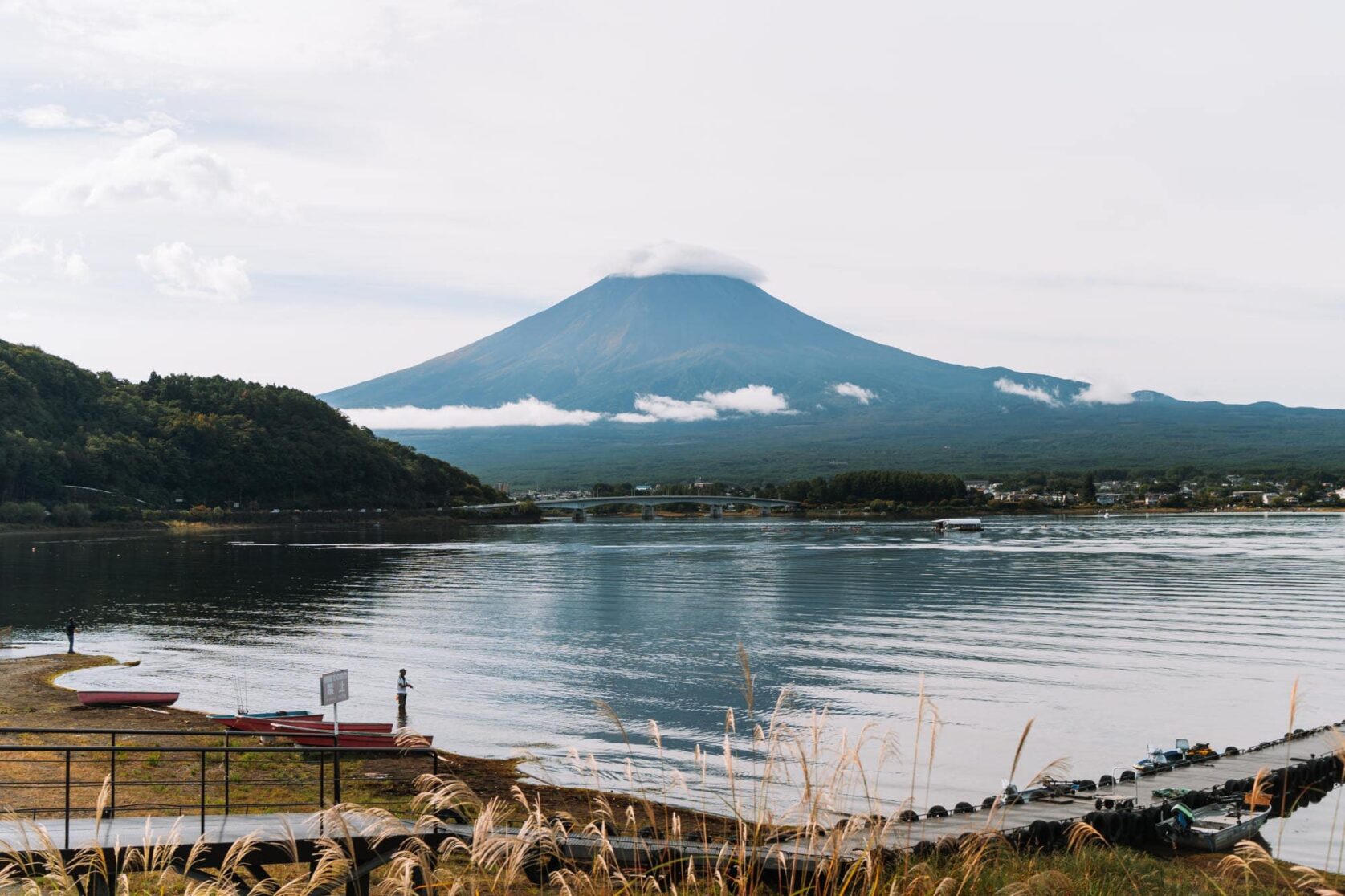
Lake Kawaguchi is the ideal home base for visiting Mount Fuji. Its location is very central relative to most sights, and you’ll find plenty of accommodations and restaurants. At the bottom of this article, you can read about our favorite accommodations around Lake Kawaguchi.
Good to know: Besides Lake Kawaguchi, Hakone is also often mentioned as a base for Mount Fuji. While Hakone is in a beautiful setting, the view of Mount Fuji is not as spectacular there because it is further away. Furthermore, there is less to do in that area compared to the Fuji Five Lakes region.

How to travel to Mount Fuji (Lake Kawaguchiko)
Most people travel from Nikko, Tokyo, or Kamikochi to Kawaguchiko, the base for Mount Fuji. Traveling by public transport? Check Google Maps for the latest train and bus times.
From Nikko to Mount Fuji (Lake Kawaguchiko)
By public transport: First, travel by train to Tokyo. From Tokyo, continue to Kawaguchiko by train or bus. Keep in mind a travel time of about five to six hours, including transfers.
By rental car: This drive usually takes four to five hours. You’ll mostly drive via highways.
From Tokyo to Mount Fuji (Lake Kawaguchiko)
By public transport: Traveling from Tokyo to Kawaguchiko can be done in several ways. First, travel to Otsuki Station. Here, transfer to the Fujikyuko Line, which takes you directly to Kawaguchiko Station. If you want to travel faster and more comfortably, you can choose the direct Fuji Excursion train from Shinjuku Station. This takes about two hours. Another option is the direct Highway Bus from the Shinjuku Expressway Bus Terminal. This ride usually also takes around two hours and is often cheaper than the train. Keep in mind that the bus can sometimes experience delays due to heavy traffic.
By rental car: The car ride from Tokyo to Kawaguchiko takes about two hours. It is a straightforward route via highways. However, do account for potential traffic congestion.
From Kamikochi to Mount Fuji (Lake Kawaguchiko)
By public transport: From Kamikochi, first take the bus to Takayama or Matsumoto. From there, travel further by train and bus towards Otsuki and finally take the Fujikyuko Line to Kawaguchiko. This is a long travel day of five to seven hours, depending on connections.
By rental car: By car, it takes about three and a half to four hours. The route goes through mountainous areas and is very beautiful, but keep in mind curvy roads and potential crowds during the high season.


What to do in the Mount Fuji area?
The Mount Fuji area offers many beautiful spots and fun activities. These are my tips!
Tip: The sights around Mount Fuji are often too far apart to explore entirely on foot. There are various ways to get around, such as public transport, a rental car, or an electric bike. I chose the latter and rented a bike in Kawaguchi at Rental Cycle Puu San.
Watch the sunrise at Chureito Pagoda
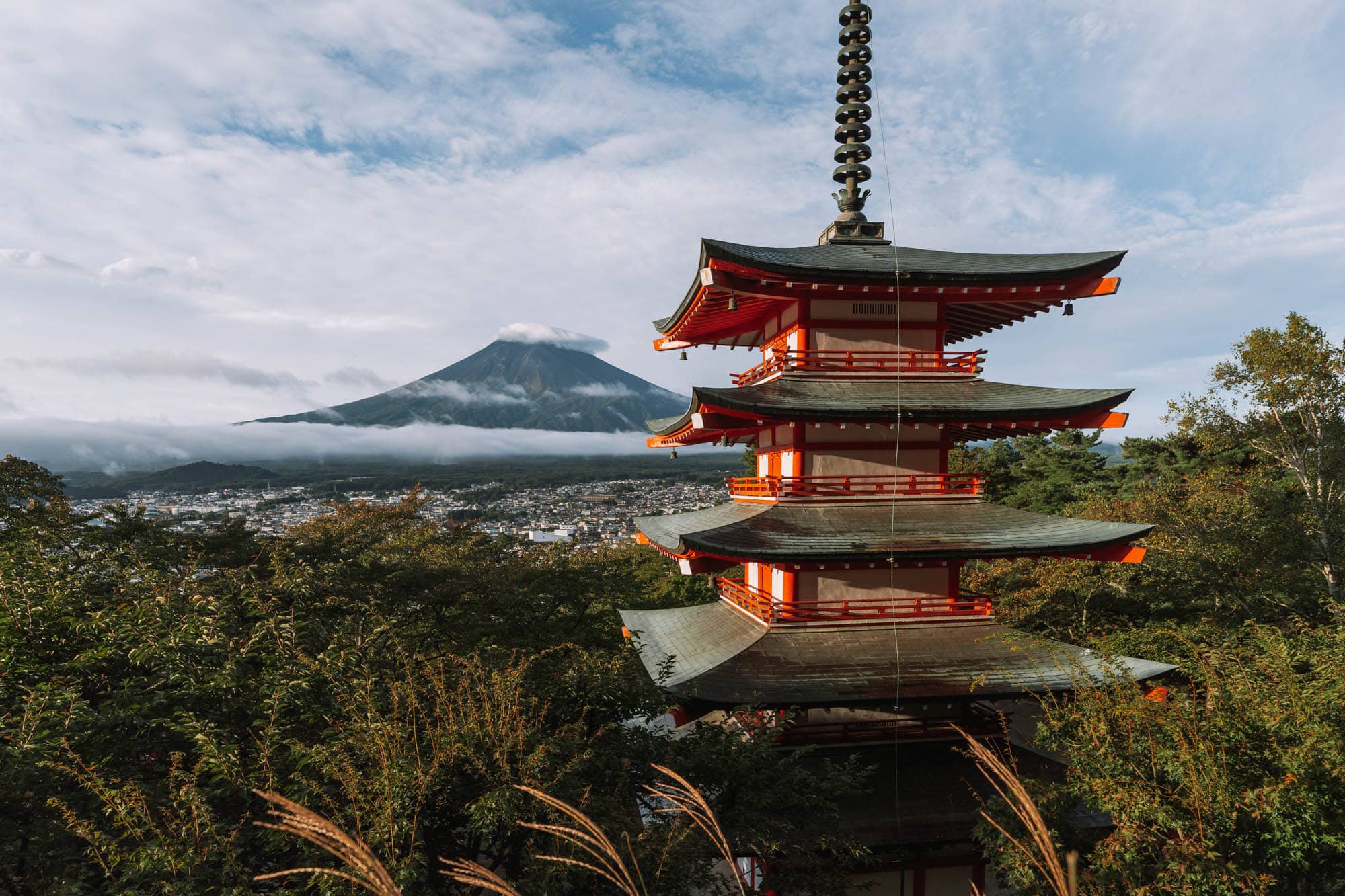
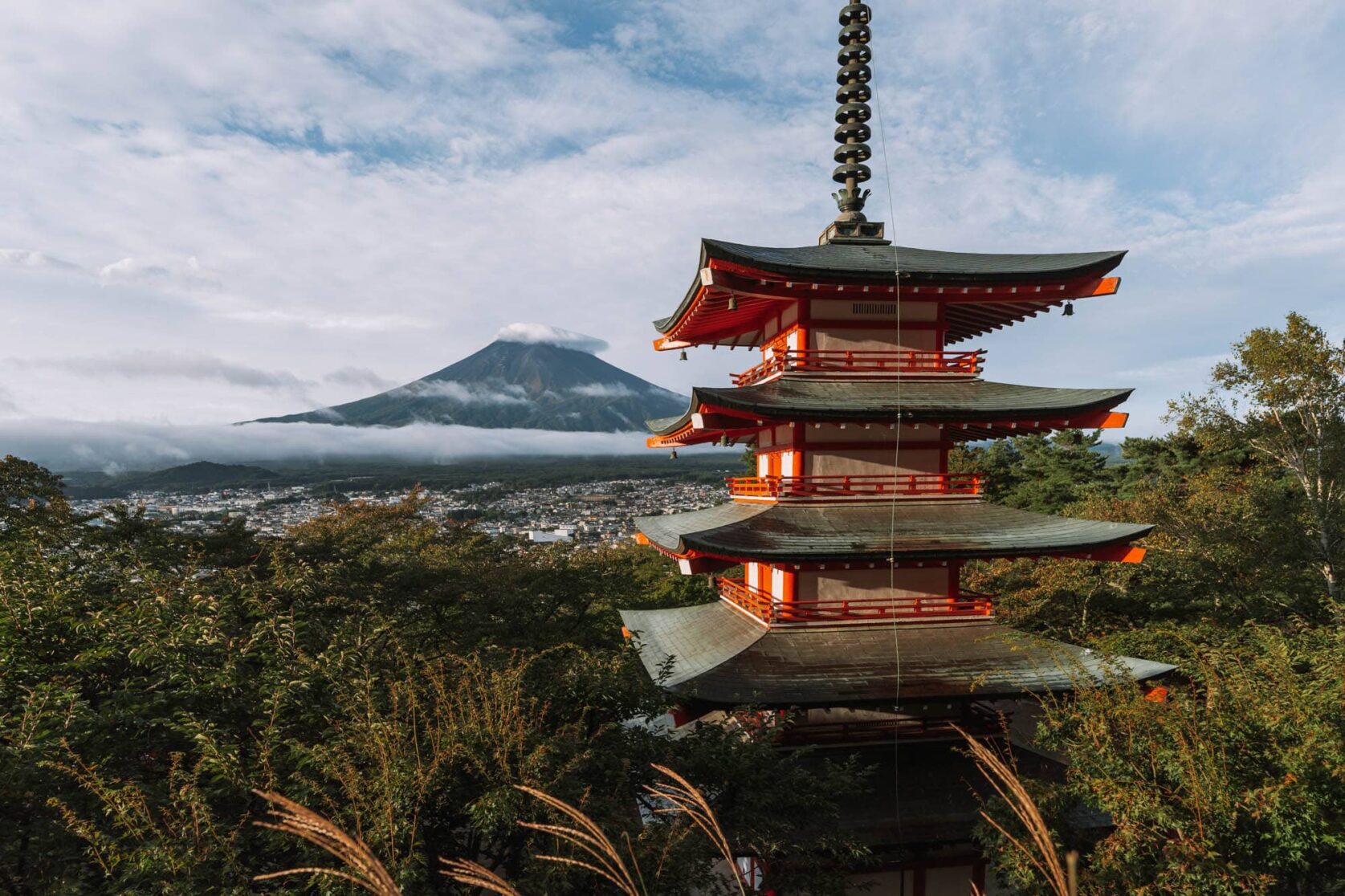
Chureito Pagoda is without a doubt the most iconic viewpoint in Japan. It’s that image you often see on postcards: a bright red pagoda with the (snow-capped) peak of Mount Fuji behind it. And believe me, it’s even more impressive in person! It’s a bit of a climb—398 steps—but as soon as you reach the top and the sky is clear, you are rewarded with an unforgettable view. It can get quite crowded during sunset, resulting in lines to take a photo on the observation platform.
Mount Fuji Visibility: Mount Fuji is visible an average of only 100 days per year. This website provides an estimate of whether Mount Fuji is visible. The best time of day is from sunrise until about 10:00 AM. It often gets cloudy in the afternoon.

Enjoy the view of Mount Fuji at Oishi Park
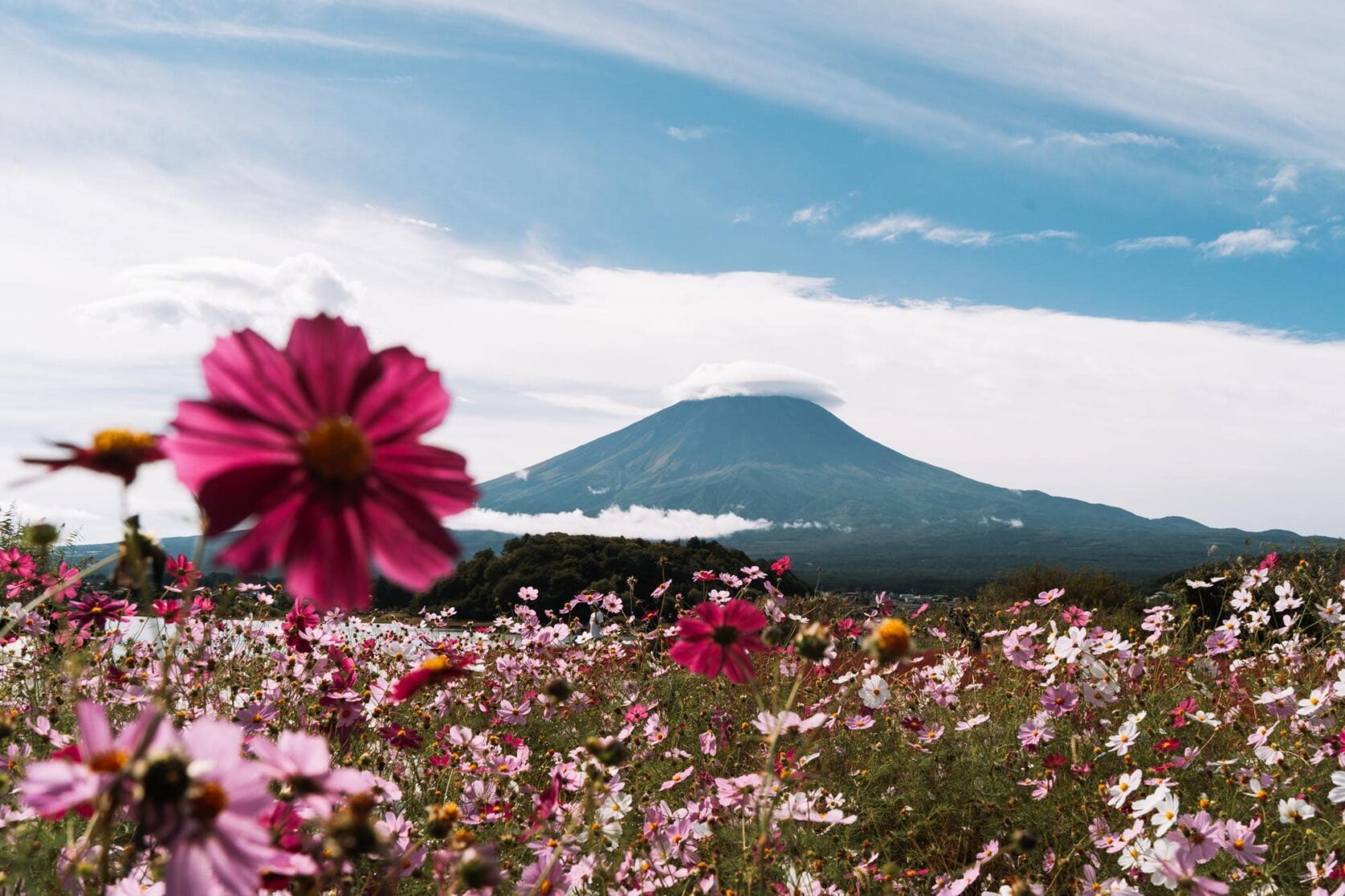
Oishi Park is a beautiful spot on Lake Kawaguchiko overlooking Mount Fuji. Here you’ll find beautifully landscaped gardens with colorful flowers and plants, which makes the image with the volcano behind it even more photogenic. It is a popular spot and gets crowded quickly during the day. If you want to experience this place in peace, it’s best to go early in the morning. The park is free to visit 24 hours a day.
Tip: If you’re there during the day and find it too busy, drive back and look for another quiet spot along the lake where you can enjoy the view in peace, such as at Nagasaki Park. Or rent a canoe to paddle across Kawaguchiko Lake during sunset.

Lunch in a centuries-old traditional Japanese house
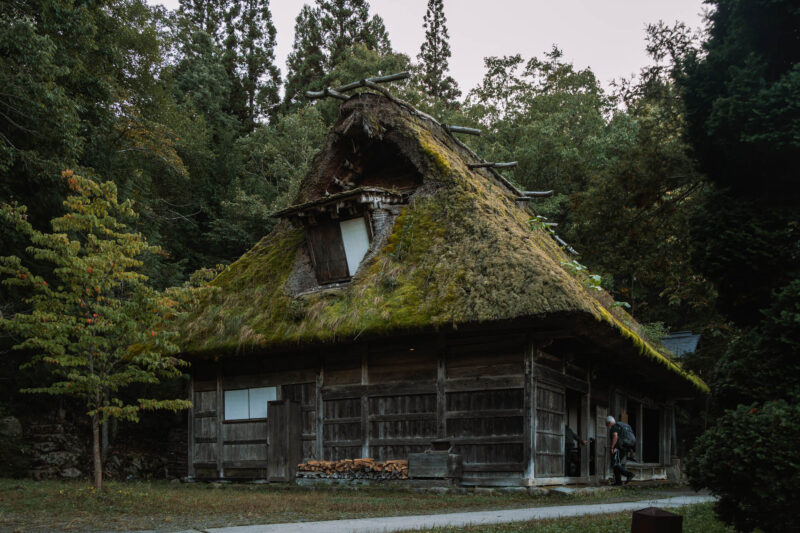
Traditional Japanese House Nakamura is a special restaurant located in a two-hundred-year-old Japanese house at the foot of Mount Fuji. Here you can enjoy a traditional lunch prepared with much love and care. The friendly owner speaks good English and enjoys sharing stories about the house’s history. The serene atmosphere, tatami floors, low tables, and centuries-old interior take you back in time. The vegan oju box and homemade cakes are true highlights, as is the delicious matcha.


Walk through Shimoyoshida Honcho Street
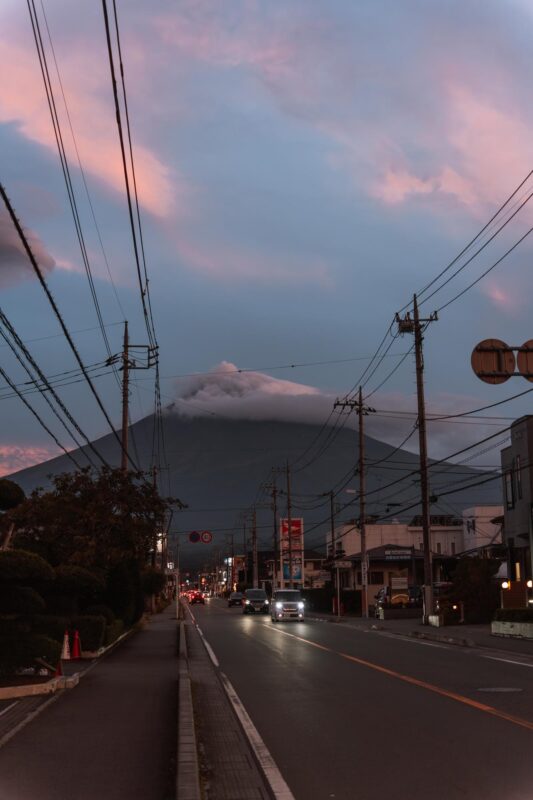
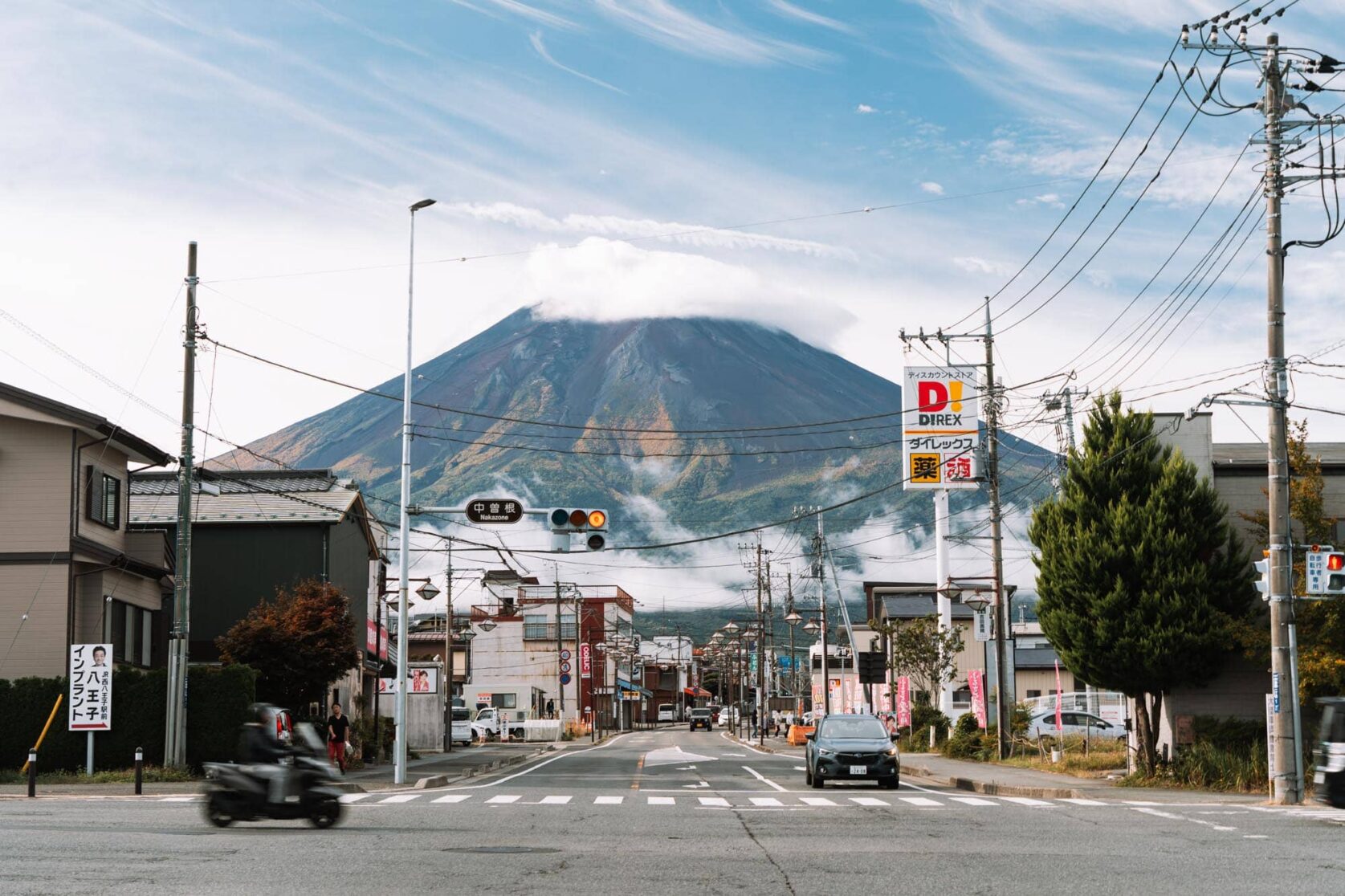
Shimoyoshida Honcho Street is one of the few places where you see Mount Fuji perfectly framed in the center of the street. As you walk here, you see the mountain towering above the street between the power lines and shop signs. But you also have a great view of the volcano from the side streets. The best time to take a photo here is early in the morning, when it’s still quiet and the chance of clouds is lower. Do pay close attention to traffic and obey the traffic lights.
Tip: After admiring the view of Mount Fuji, go for a nice breakfast at FabCafe Fuji. This hip spot serves delicious coffee and healthy dishes.

View the autumn colors at Momiji Corridor
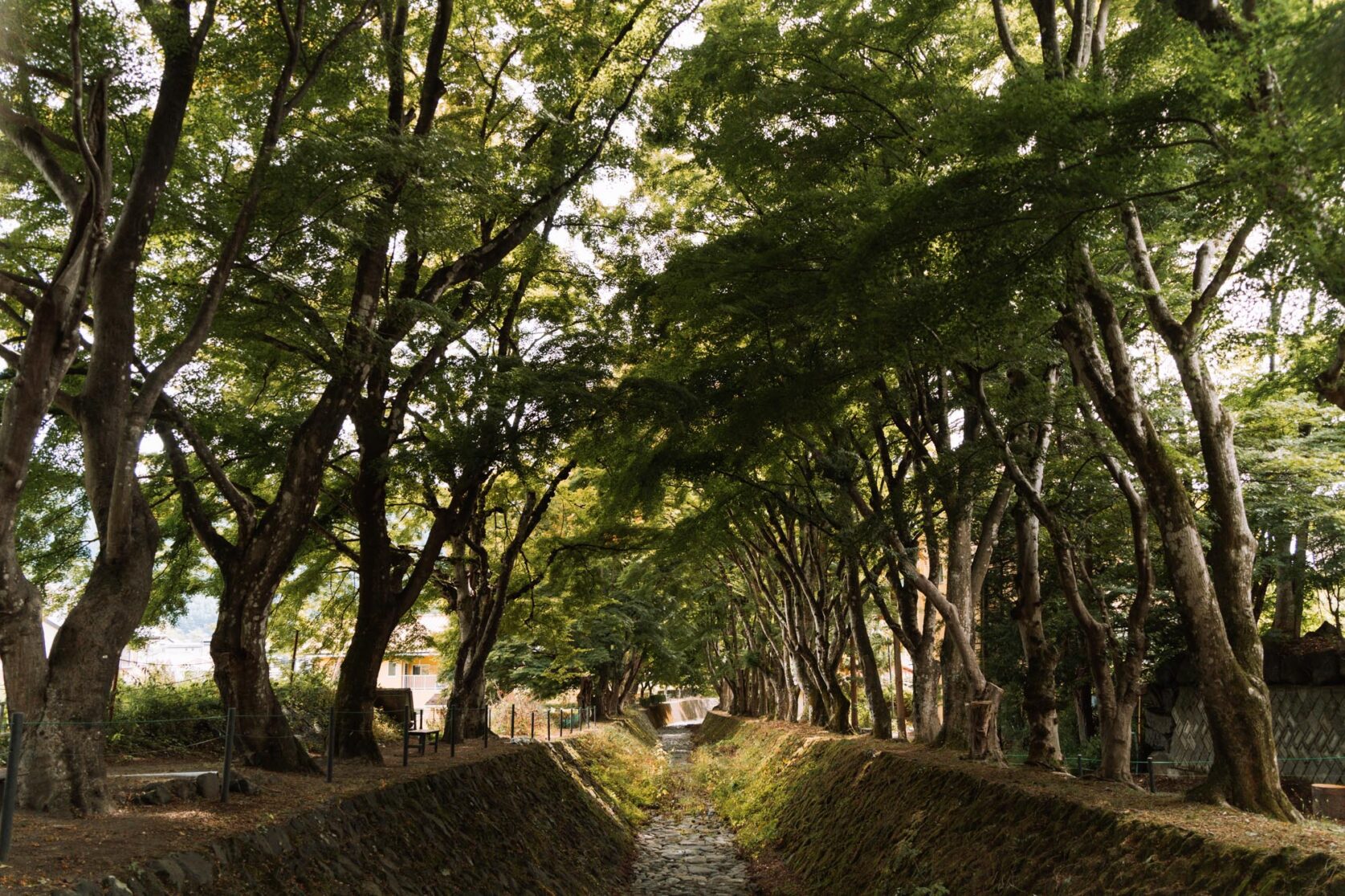
When October turns into November, the Japanese maples (momiji in Japanese) turn orange and deep red. At the Momiji Corridor, not far from Oishi Park, dozens of these trees stand along a narrow canal about 150 meters (492 feet) long. Their canopy forms a tunnel of autumn colors that you can walk under. Unfortunately, I was just a bit too early for the autumn colors, as you can see in the photo below.
During the annual Kawaguchiko Autumn Leaves Festival, which usually takes place from late October to mid-November, the path is atmosphericallly lit in the evening. Local residents then sell snacks, tea, and handmade products. Momiji Corridor is especially beautiful to visit in the autumn.

Climbing Mount Fuji
If you’re looking for an active challenge during your trip to Japan, climbing Mount Fuji is a must-do! The official climbing season runs from early July to early September. During this period, you can climb the mountain without a guide. Routes outside the season are closed or too dangerous due to snow, cold, and closed mountain huts.
There are four main trails leading to the summit of Mount Fuji. Yoshida Trail is the most popular and starts at the 5th station in Kawaguchiko. The climb takes an average of five to seven hours up and three to five hours down. Many people leave in the afternoon, sleep halfway in a mountain hut, and summit at sunrise. There are various mountain huts at both the seventh and eighth stations. Berghutten Ganso-muro and Hakuun-so are among the best-rated huts.
Climbing Mount Fuji is perfectly doable without a guide but requires good preparation. The weather can change quickly, and at the summit, temperatures can be around freezing even in summer. Bring warm clothing, plenty of water, snacks, and sturdy hiking boots.
Good to know: Since 2025, new rules have been in place for climbing Mount Fuji. For some routes, you must register online in advance, and there is a mandatory entry fee. On the Yoshida Trail, you are not allowed to start between 2:00 PM and 3:00 AM without a mountain hut reservation. So make sure you book a hut or start the climb on time, and check the rules on the official website.
Walk through the torii gate of Kitaguchi Hongu Fuji Sengen Shrine
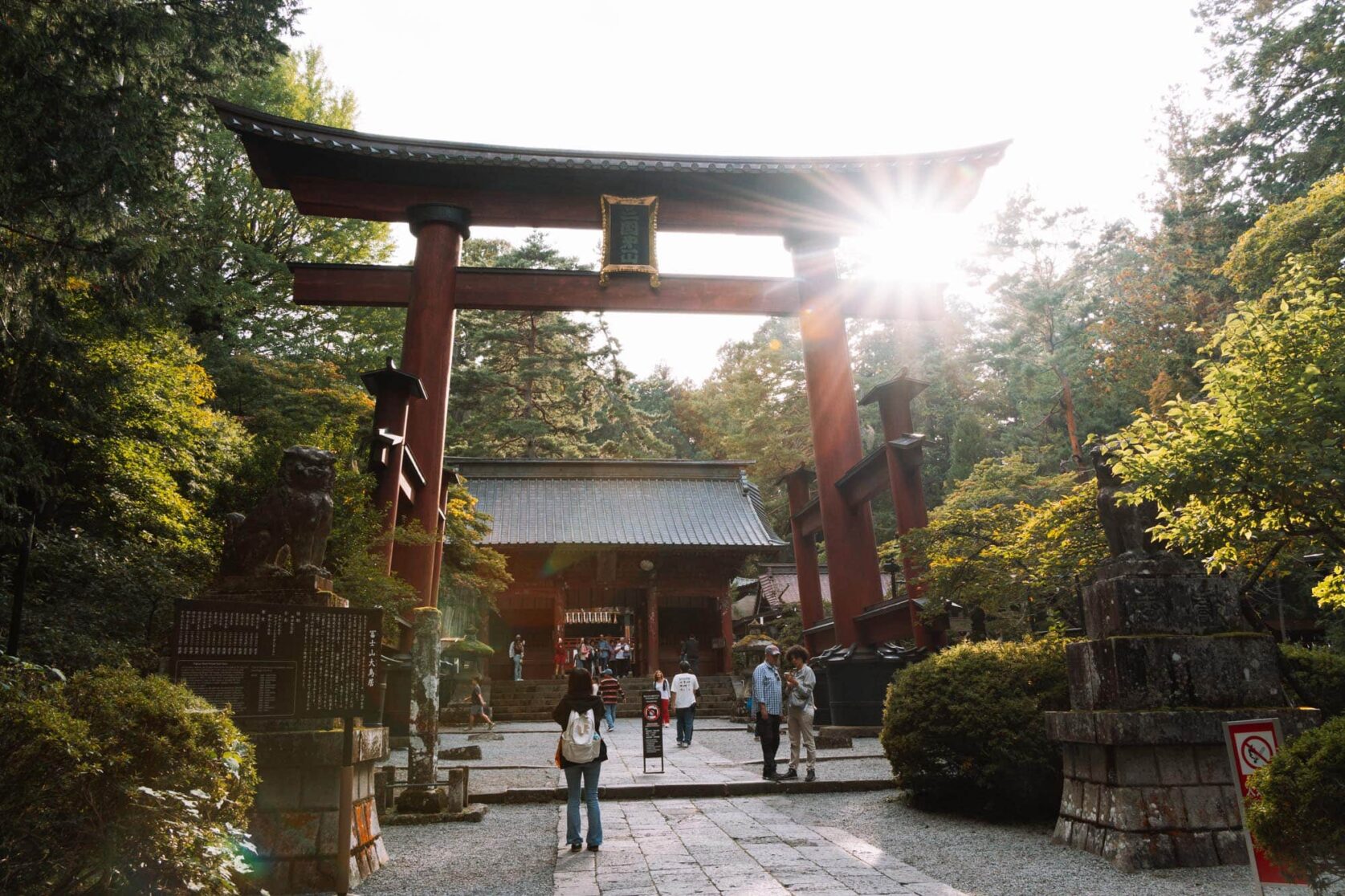
Kitaguchi Hongu Fuji Sengen Shrine, which is more than 1,000 years old, served for centuries as the official starting point for the climb to the summit of Mount Fuji. Pilgrims came here to pray for protection before beginning their journey. A wide avenue lined with old cedar trees leads you to a large wooden torii entrance gate. Unlike many other famous temples and shrines, it is usually not very crowded here. This allows you to enjoy a lovely quiet walk. Behind the shrine lies a walking path that marks the start of the historic Yoshida Trail. Even if you aren’t going to climb Mount Fuji, you can still walk a short distance up the path.

Cycle around Lake Yamanaka
Lake Yamanaka is the largest of the Fuji Five Lakes and offers some of the most beautiful views of Mount Fuji. There is a 13-kilometer (8.1-mile) path around Lake Yamanaka, and it’s fun to cycle all the way around the lake. You cycle on a well-maintained path that is mostly flat and runs alongside the water. Many swans live on the lake, and during your ride, the view of Mount Fuji will constantly change. Along the route, there are small parks, picnic spots, and viewpoints where you can stop for a bit.
Getting hungry? At the restaurant The Park, they serve the best pancakes and you have a great view of the lake and the volcano. On the other side of the lake, you’ll find Hammock Cafe, great for a nice cup of coffee on the terrace.


Admire the 200-meter-wide Shiraito Falls
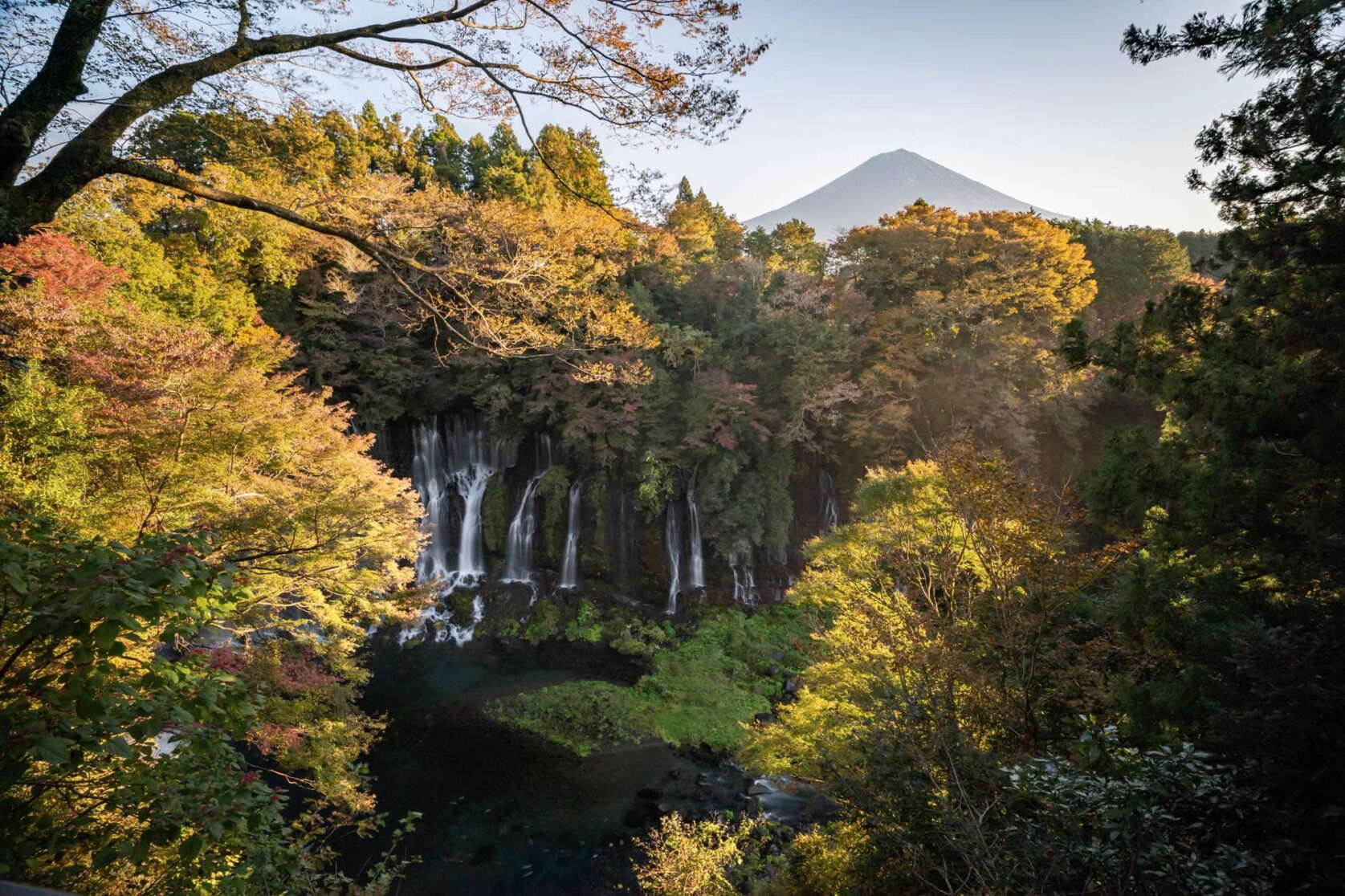
The Shiraito Falls are among the most beautiful waterfalls in Japan. The name literally means “waterfalls of white threads,” and as soon as you arrive here, you understand why. Over a moss-covered cliff 20 meters (66 feet) high and 200 meters (656 feet) wide, the water flows down in thin strands, like a kind of curtain. From the first observation platform, you see not only the waterfall in all its glory but also Mount Fuji in the background on clear days. You can descend to the foot of the waterfall via a staircase, where there is a second platform for a different perspective. Swimming is unfortunately not allowed.
How to get to Shiraito Falls? Keep in mind that the waterfall is about 30 kilometers (18.6 miles) from Lake Kawaguchi. By car, it takes about an hour each way. You can also travel by bus from Lake Kawaguchi to Shiraito Falls. However, the bus only runs a few times a day, so check the departure times carefully in advance to ensure it fits into your travel schedule.

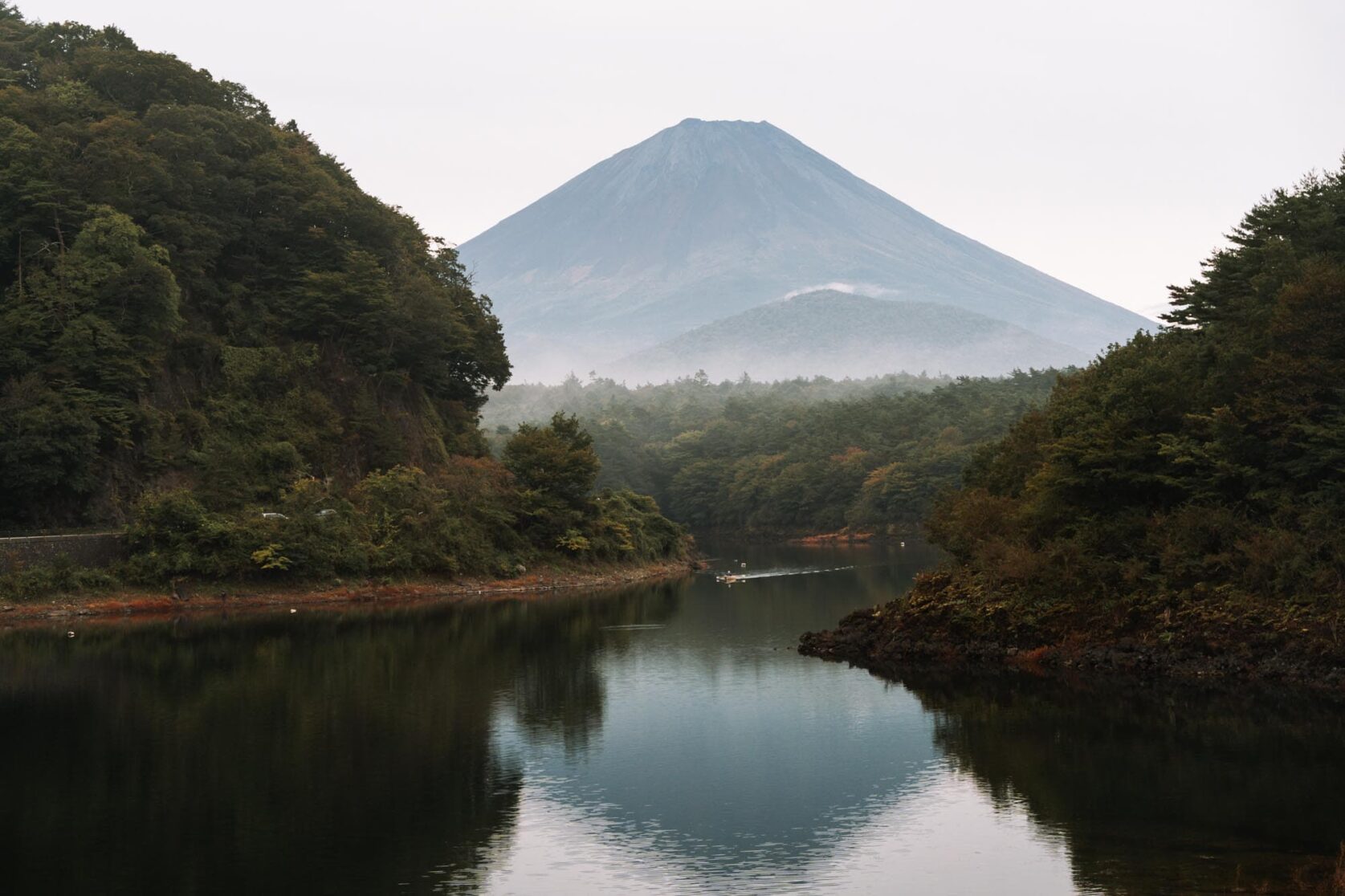
Watch the sunrise from Tatego-Hama Beach at Lake Shōji
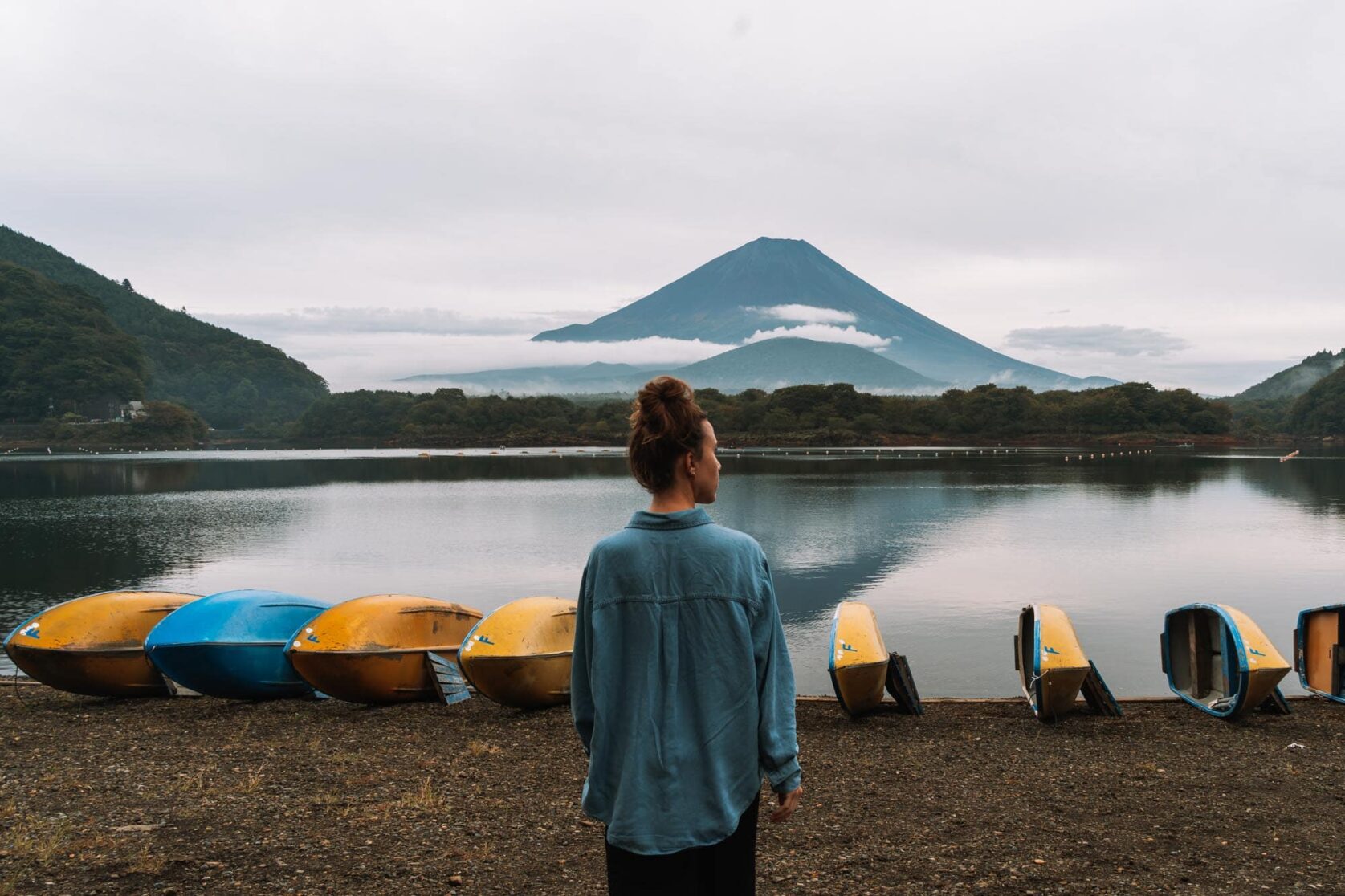
Tatego-Hama Beach is one of the most beautiful spots to watch the sunrise. This spot is located on the east side of Lake Shōji, and from here you have a view of Mount Fuji and the sun rising beside it. The volcano reflects in the still water of the lake, and in the early morning, fishermen in small boats return with their catch. All together, this makes for a picturesque scene. Compared to the larger lakes like Lake Kawaguchiko and Lake Yamanakako, Lake Shōji is still remarkably quiet. Along the shores, you’ll find only a few simple accommodations, campsites, and traditional ryokans directly on the water. Consequently, this place truly feels undiscovered.
Good to know: From Lake Kawaguchiko, it is about an hour’s bike ride to Lake Shōji.

Tips for good restaurants in the Mount Fuji area
- FabCafe Fuji – This nice eatery is located in the town of Fujiyoshida, on the famous Shimoyoshida Honcho Street. You can have a delicious healthy breakfast and lunch here!
- Traditional Japanese House NAKAMURA – This traditional restaurant is located in a beautiful old monk’s inn. You can enjoy a refined vegan lunch here.
- The Park – A charming little cafe on Lake Yamanaka where they serve delicious pancakes. The view of Mount Fuji is amazing from here!
- Beef Cutlet Restaurant koushuya – This restaurant at Lake Kawaguchi serves crispy fried beef steak cutlets served on a Mount Fuji lava stone.
- Shaw’s Sushi Bar & Dining – This top-tier sushi restaurant at Lake Kawaguchi will not disappoint. The menu is extensive and includes plant-based and gluten-free options.
- Fuji Tempura Idaten – At this popular tempura restaurant, it’s always busy, so there’s a good chance you’ll have to wait. Choose the extra special ‘Fujisan Tendon’ dish that symbolizes the mountain.
- Hoto Fudo – For the local specialty “hōtō noodles” in miso broth, Hoto Fudo is the place to go. There are several locations around Lake Kawaguchiko.
- Sanrokuen – Authentic Japanese barbecue in a traditional building; ideal for a special evening with meat, fish, and atmosphere.
- La Luce – Craving something other than Japanese cuisine? This Italian spot serves delicious pizzas and pastas!


Our favorite places around Lake Kawaguchi (Mount Fuji)
Located on the famous Shimoyoshida Honcho Street in the town of Fujiyoshida is Hostel Saruya. Thanks to its central location, this is a great base, but the accommodation has much more to offer. There is a very nice atmosphere, the interior is stylish, and the rooms are spacious. The hostel is located above the breakfast spot FabCafe Fuji, which we recommended earlier in this article. Breakfast is also served here, a wonderful start to your day! For a relaxing stay, Hotel Fuji Tatsugaoka is also the place to be. This is mainly due to the hotel’s fine onsen. It’s wonderful to be able to relax in the warm water after a day out. Additionally, you stay in a modern room with a comfortable bed and air conditioning. Those looking for a special overnight experience will feel right at home at Retreat Camp Mahoroba. This glamping site is located on the north side of Lake Kawaguchi and offers a great view of Mount Fuji. The grounds feature various types of tents, bungalows, and even villas. In the evening, the barbecue is lit, and anyone who wants can then rent the private jacuzzi for ultimate relaxation.
  Hostel Saruya Hostel Saruya |
  Hotel Fuji Tatsugaoka Hotel Fuji Tatsugaoka |
  Retreat Camp Mahoroba Retreat Camp Mahoroba |
“`